Blog / Blog
Blog
Quick Summary
- Raw Ahrefs exports look useful but are mixed datasets: stores, SaaS, local businesses, affiliates and blogs in one file.
- DR and traffic are not website types: a DR50 store and a DR50 editorial site are completely different outreach targets.
- Manual filtering works for 50 domains and breaks at 50,000: cleanup eats more time than outreach itself.
- Website classification segments exports into content-driven, ecommerce, company and media groups.
- The biggest outreach efficiency gain comes before outreach starts: from cleaning the list properly.
Most outreach problems do not start with outreach.
They start with the list.
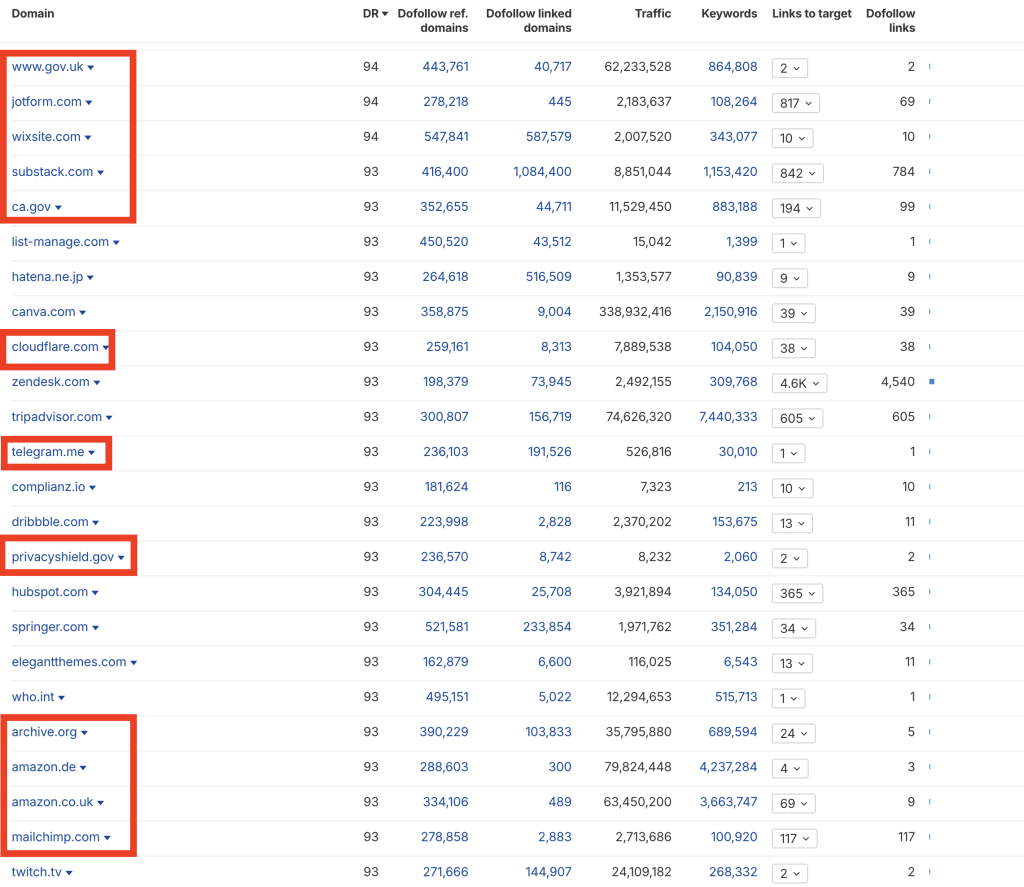
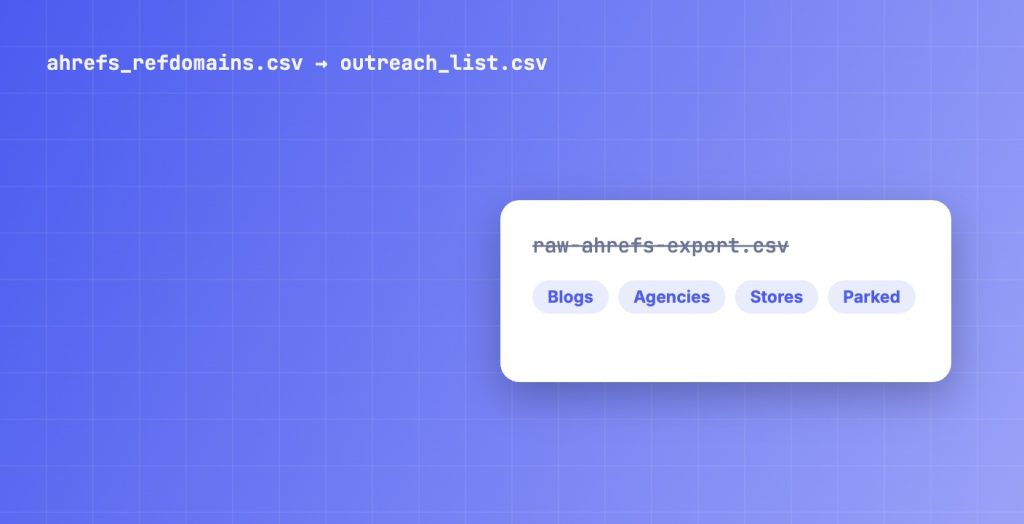
Raw Ahrefs exports often look useful at first because they contain thousands of domains, traffic metrics, DR scores, and ranking data. But operationally, they are usually mixed datasets with no segmentation by website type, business model, or content structure.
That creates bad outreach lists.
A list full of unrelated website types slows prospecting, increases manual review time, and reduces placement efficiency.
Raw Outreach Exports Usually Contain Mixed Website Types
Raw domain exports are rarely outreach-ready.
A single Ahrefs or Semrush export may contain:
- ecommerce stores
- SaaS company websites
- local businesses
- editorial blogs
- affiliate websites
- directories
- media publications
- forums
- marketplaces
- agency websites
From a metrics perspective, many of these domains can look similar.
From an outreach perspective, they behave completely differently.
A DR50 ecommerce store is not the same outreach target as a DR50 editorial website.
A local plumbing company with traffic is not useful for SaaS guest posting outreach.
A Shopify store is operationally different from a content-driven WordPress publication.
Metrics alone do not solve prospect segmentation.
Content-Driven Websites Are Different From Business Websites
Content-driven websites are websites primarily built around editorial content.

Their structure is usually optimized for publishing:
- articles
- guides
- news content
- reviews
- informational pages
These websites are typically more suitable for:
- guest post outreach
- digital PR
- link insertions
- editorial partnerships
- contributor outreach
Business websites are different.
Their primary purpose is usually:
- selling products
- generating leads
- offering services
- collecting bookings
- running SaaS products
Many raw exports mix both categories together.
That creates operational noise.
Manual Prospect Filtering Fails at Scale
Manual filtering works when reviewing 50 websites.
It breaks when reviewing 50,000.
This is where most outreach workflows become inefficient.
Teams export domains from:
- Ahrefs Content Explorer
- Ahrefs Batch Analysis
- Semrush exports
- Google scraping workflows
- competitor backlink reports
- PR media research
- ecommerce lead generation workflows
Then someone manually opens domains one by one trying to determine:
- Is this ecommerce?
- Is this a company website?
- Is this outreach-ready?
- Is this content-driven?
- Is this a media site?
- Is this a marketplace?
- Is this even relevant?
That process becomes operationally expensive very quickly.
The larger the export becomes, the more time gets wasted on domain cleanup instead of actual outreach.
Website Classification Changes Outreach Workflows
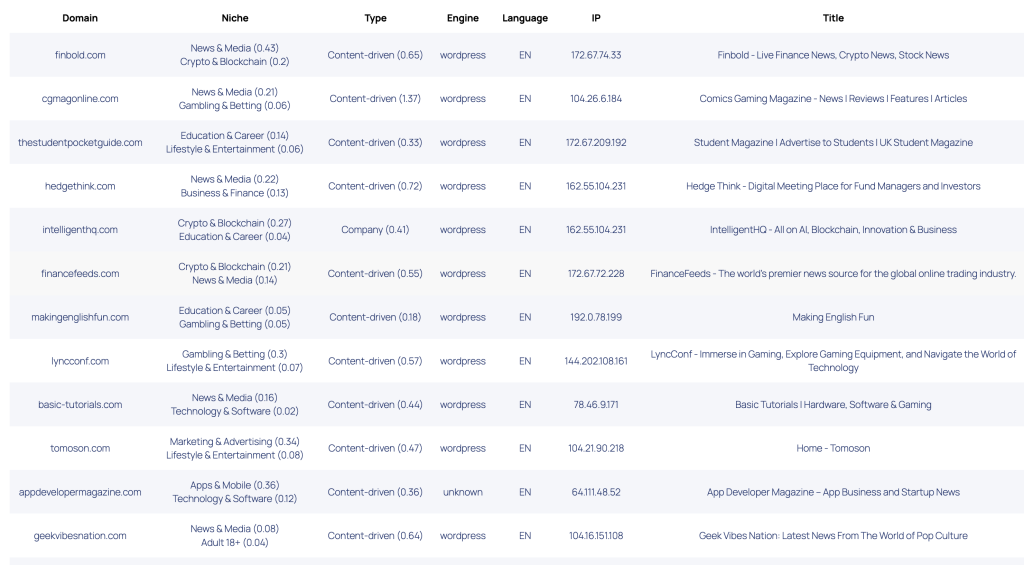
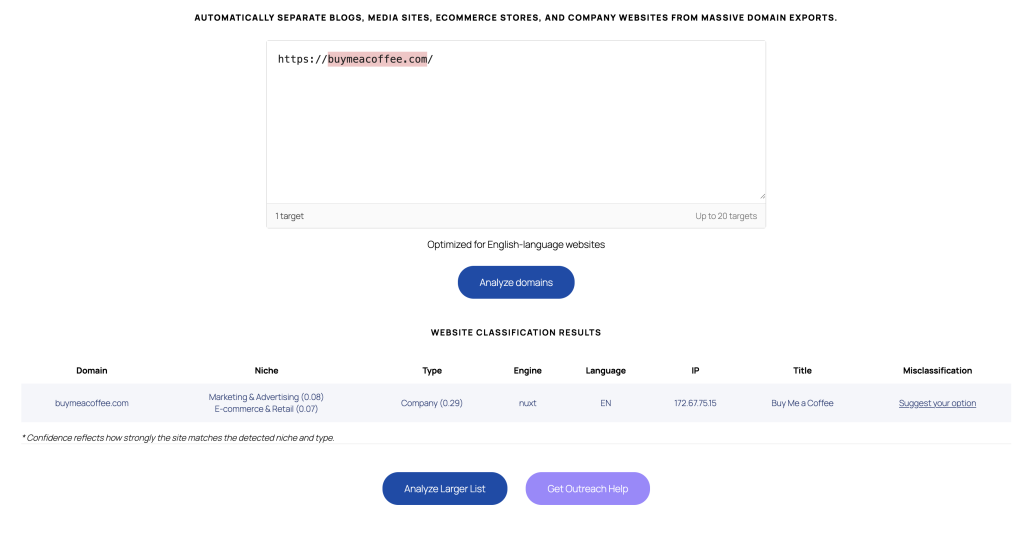
Website classification is the process of segmenting domains by operational website type.
Instead of treating all domains equally, classification systems separate them into usable categories.
For outreach workflows, this matters because different website types require different actions.
Examples:
| Website Type | Typical Outreach Use |
|---|---|
| Content-driven | Editorial post, link insertions |
| Media publications | PR outreach |
| Ecommerce stores | Partnership prospecting |
| Company websites | Lead generation |
Once domains are segmented, workflows become significantly cleaner.
Why DR and Traffic Alone Create Bad Prospect Lists
DR is not a website type.
Traffic is not a website category.
This is one of the biggest problems in outreach prospecting.
A domain can have:
- high traffic
- strong DR
- thousands of keywords
…and still be unusable for outreach.

Examples:
- ecommerce stores with no editorial content
- local businesses with service pages only
- marketplaces with user-generated listings
- thin affiliate sites with inflated metrics
Raw exports do not explain operational usability.
They only provide metrics.
That is why outreach teams still spend hours manually reviewing domains after exports are generated.
Example: Raw Ahrefs Export vs Segmented Outreach List
Before Classification
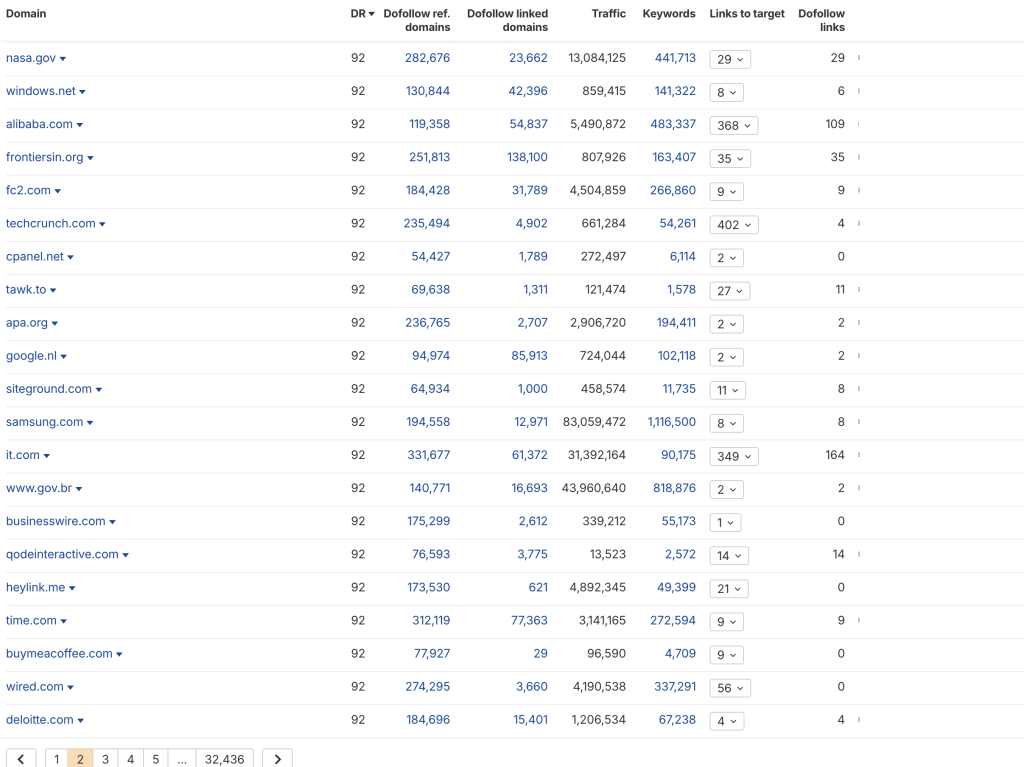
A raw Ahrefs export might contain:
- Shopify stores
- random local businesses
- SaaS companies
- magazines
- blogs
- coupon websites
- directories
- affiliate review sites
- marketplaces
Operational result:
- mixed website types
- unclear outreach paths
- heavy manual review
- inconsistent placement quality
- slow outreach preparation
After Classification
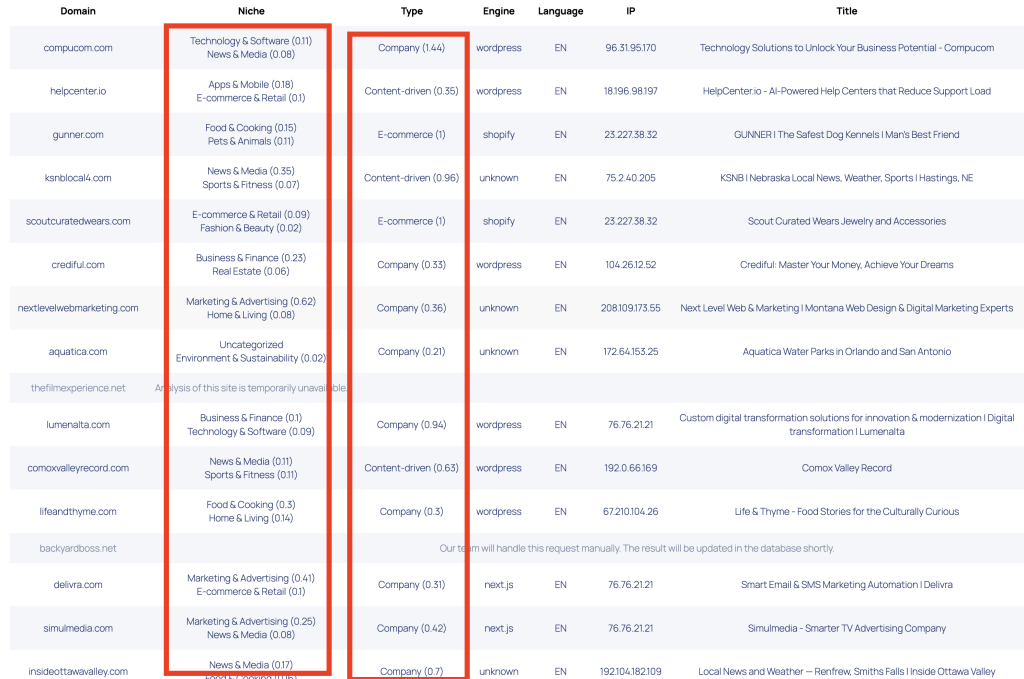
After website categorization:
- ecommerce sites grouped separately
- content-driven websites isolated
- media sites segmented
- company websites filtered
- affiliate-heavy sites identified
- irrelevant domains removed
Operational result:
- cleaner prospect lists
- faster outreach preparation
- more consistent outreach workflows
- easier assignment by campaign type
- reduced manual filtering
The difference is not theoretical. It directly affects outreach speed.
How SiteTypes Fits Into Outreach Workflows
SiteTypes is a website classification utility.
It is designed to help segment raw domain exports into operational website categories.
Instead of manually reviewing every domain, users can classify websites by:
- website type
- niche
- CMS/platform signals
- content orientation
- ecommerce indicators
The goal is not “AI analysis.”
The goal is workflow cleanup.
Typical workflow:
1. Export Domains
Sources may include:
- Ahrefs exports
- Semrush exports
- competitor backlink exports
- Google search scraping
- Content Explorer exports
2. Run Classification
Domains are analyzed and grouped by:
- content-driven
- ecommerce
- company
3. Filter Outreach-Ready Domains
Teams isolate:
- editorial websites
- niche blogs
- media opportunities
- Magazines
4. Build Outreach Lists
Instead of reviewing thousands of mixed domains manually, outreach teams start with cleaner segmented datasets.
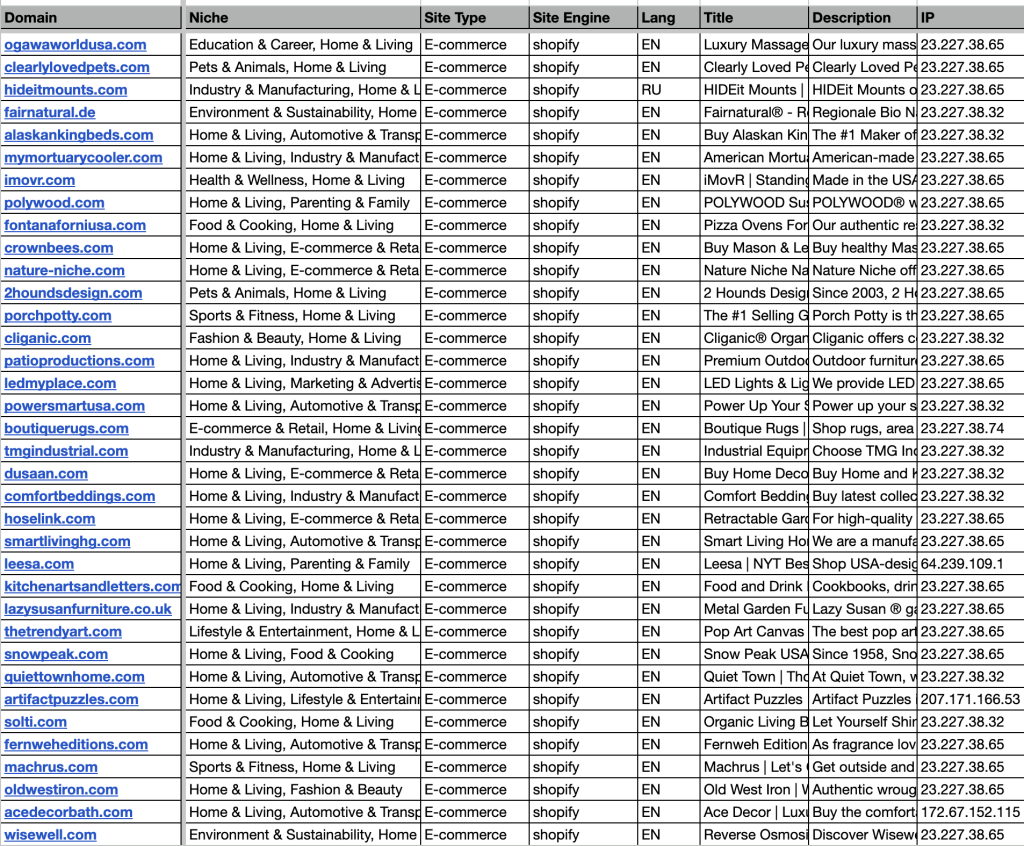
Example: Finding Shopify Stores by Niche
This is one of the clearest examples of why classification matters.
Raw ecommerce prospecting exports are usually messy.
A generic Shopify footprint search may return:
- abandoned stores
- agencies
- blogs
- fake storefronts
- unrelated companies
- thin affiliate pages
Classification helps isolate:
- real ecommerce stores
- niche-specific stores
- Shopify-powered websites
- operational businesses
That changes lead generation workflows significantly.
Media & PR Prospecting Has the Same Problem
PR prospecting workflows also suffer from mixed exports.
A media export may contain:
- real publications
- company blogs
- sponsored content farms
- local businesses
- syndication websites
Without classification, PR teams manually clean lists for hours.
Segmented prospect lists reduce unnecessary review work.
Outreach-Ready Websites Are Operationally Different
Outreach-ready websites are domains realistically usable for outreach campaigns.
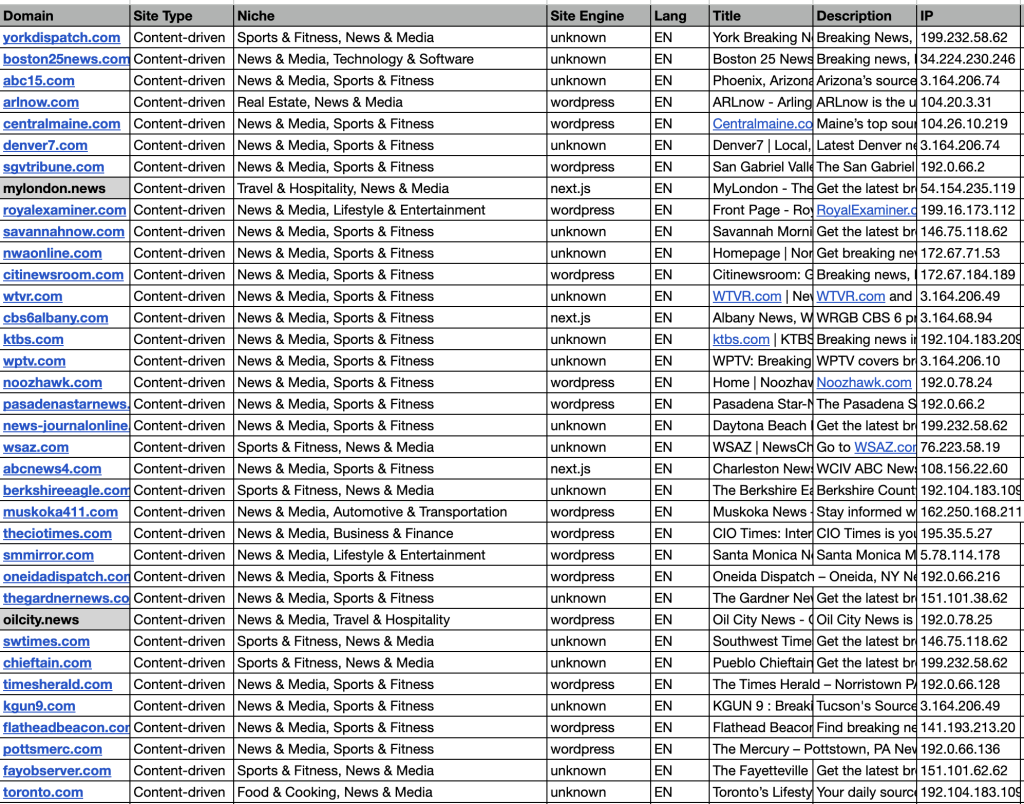
That usually means:
- active editorial publishing
- visible content structure
- topical relevance
- real indexing history
- organic keyword footprint
- clear article architecture
Not every indexed domain qualifies.
Not every DR60 site is operationally useful.
This distinction matters more as outreach scales.
The Real Problem Is Prospect Cleanup
Most outreach inefficiency comes from prospect cleanup.
Not outreach itself.
Teams often spend more time:
- reviewing domains
- removing irrelevant websites
- checking business models
- identifying content structure
- filtering unusable prospects
…than actually contacting publishers.
That is why domain segmentation matters operationally.
Operational Conclusion
Raw Ahrefs exports create bad outreach lists because they mix fundamentally different website types into one dataset.
Metrics alone do not create outreach-ready prospect lists.
Website classification helps transform:
- mixed exports
- unclear prospect pools
- manual review workflows
into:
- segmented datasets
- cleaner outreach preparation
- operationally usable prospect lists
For outreach teams, the biggest efficiency gain often comes before outreach even starts.
It comes from cleaning the list properly first.
Try it on your own list
Paste up to 20 domains and see the structured output. Free, no card required.
Analyze domains
We build tools that turn raw domain lists into structured market data for outreach, PR and research.