Blog / Blog
Blog
Quick Summary
- Ecommerce prospect lists are usually mixed: Shopify stores sit next to blogs, SaaS sites, agencies and marketplaces.
- SiteTypes automatically detects ecommerce websites and identifies Shopify-powered stores in any domain list.
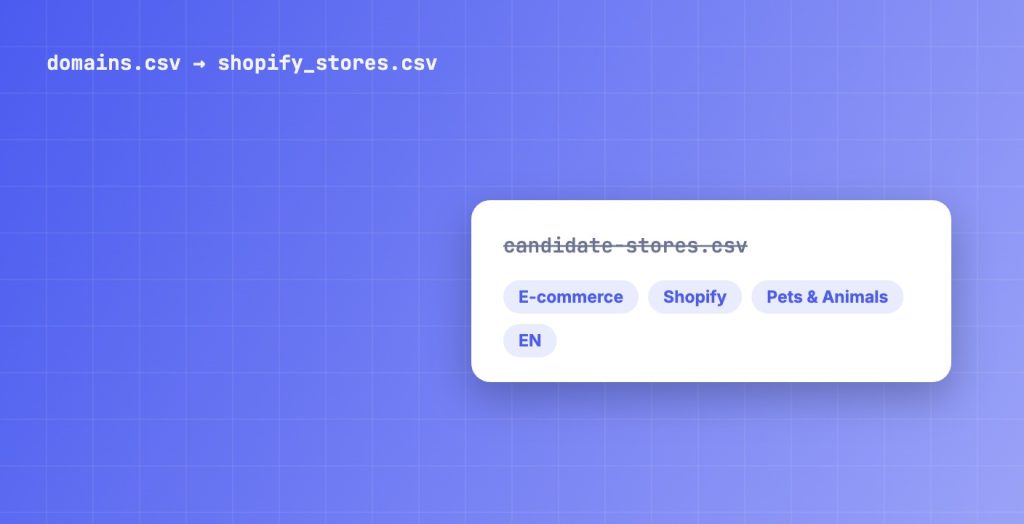
- Each domain gets a niche category, website type, CMS and language, so lists can be segmented by niche.
- Typical uses: ecommerce lead generation, Shopify app prospecting, agency prospecting, niche research, partnerships.
- The result: clean, niche-specific Shopify prospect lists without hours of manual filtering.
Identify Shopify-powered ecommerce stores from large domain lists
SiteTypes helps agencies, sales teams, marketers, and ecommerce researchers automatically identify Shopify stores and segment them by niche, website type, and ecommerce structure.
Upload raw domain lists and quickly separate Shopify-powered stores from blogs, company websites, directories, marketplaces, and unrelated domains.
The Problem With Ecommerce Prospecting
Finding ecommerce businesses manually is slow and inconsistent.
Teams often build prospect lists from:
- Google search scraping
- ecommerce directories
- competitor research
- Ahrefs exports
- marketplace exports
- niche website collections
- manually collected domains
The problem is that most lists are mixed.
A single export may contain:
- Shopify stores
- WooCommerce websites
- blogs
- SaaS companies
- agencies
- marketplaces
- media websites
- irrelevant domains
Manual filtering quickly becomes a bottleneck.
Teams often spend hours opening websites individually just to determine:
- whether the site is actually an ecommerce store
- which platform it uses
- whether the niche is relevant
- whether the business fits the target audience
This slows down lead generation, outreach, partnership research, and ecommerce prospecting workflows.
How SiteTypes Helps
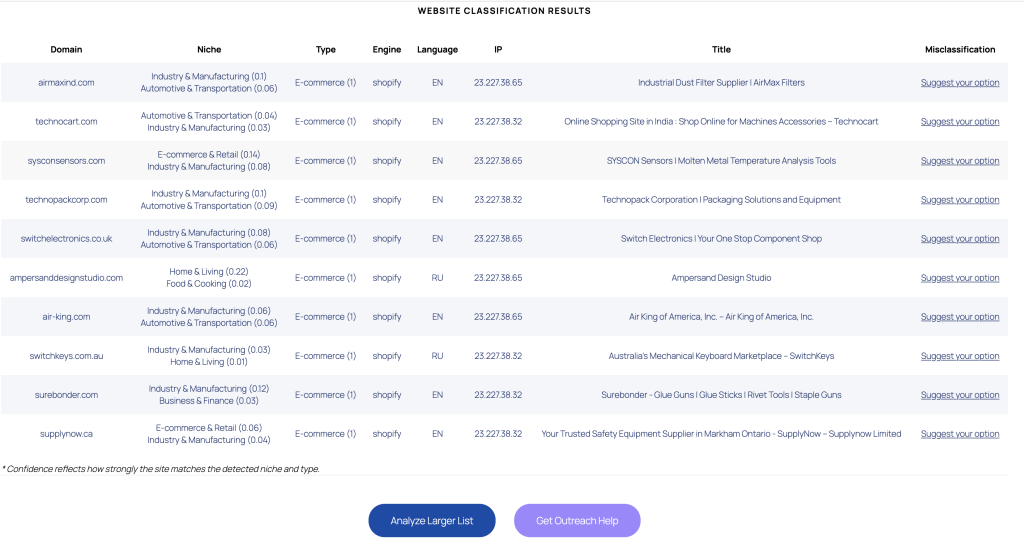
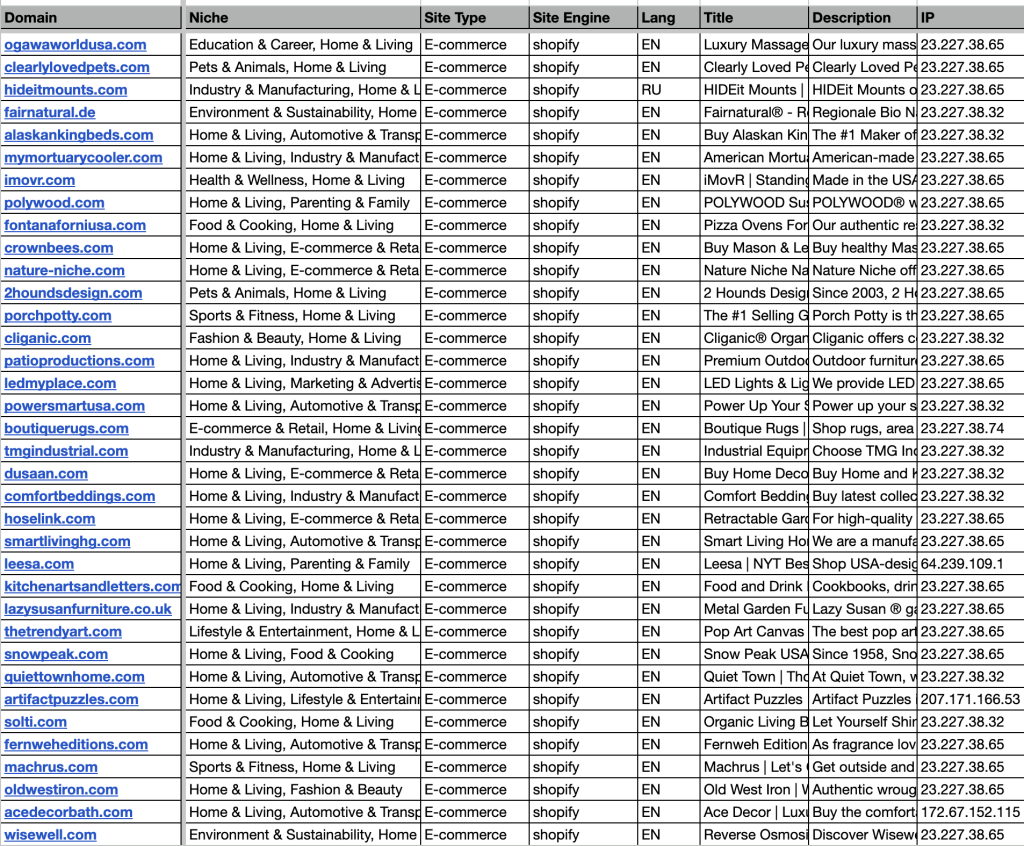
SiteTypes automatically analyzes domains and identifies Shopify-powered ecommerce websites.
Instead of manually reviewing domains one by one, teams can quickly isolate:
- Shopify stores
- ecommerce brands
- DTC websites
- niche online stores
- ecommerce-focused businesses
The system also detects:
- niche categories
- website type
- CMS / ecommerce platform
- language signals
This makes ecommerce prospecting workflows easier to organize and scale.
Workflow
1. Export or collect domains
Start with a raw list of domains collected from:
- Ahrefs
- Google search results
- ecommerce directories
- competitor research
- custom crawlers
- niche databases
At this stage, the list usually contains mixed website types that require manual filtering.
2. Upload your list
Paste domains directly into SiteTypes or upload a CSV file for analysis.
The system processes each domain individually and extracts structural website signals automatically.
This allows large ecommerce lists to be reviewed much faster than manual browsing.
3. Automatically identify Shopify stores
SiteTypes detects ecommerce websites and identifies Shopify-powered stores automatically.
The system can also distinguish:
- company websites
- blogs
- media websites
- non-ecommerce domains
Additional classification signals may include:
- niche category
- CMS / website engine
4. Build cleaner ecommerce prospect lists
Once classified, teams can focus directly on:
- Shopify stores
- niche ecommerce brands
- DTC businesses
- ecommerce-specific prospect groups
This reduces time wasted reviewing irrelevant domains manually.
Example Workflow
An agency exports 8,000 ecommerce-related domains from Google search scraping and competitor research.
The raw export contains:
- Shopify stores
- WooCommerce websites
- blogs
- SaaS companies
- agencies
- marketplaces
- irrelevant websites
Instead of manually reviewing websites one by one, the team uploads the list into SiteTypes and filters Shopify-powered ecommerce stores within a specific niche.
The result is a cleaner ecommerce prospect list that requires significantly less manual qualification.
Before / After
BEFORE
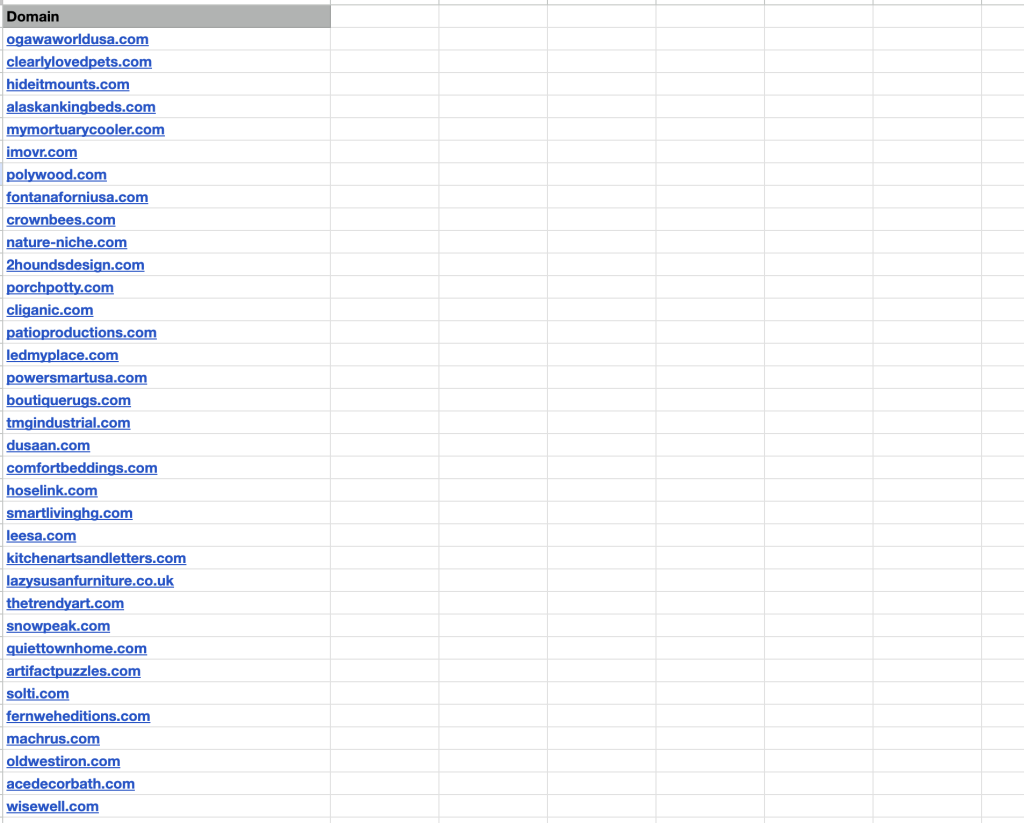
Raw ecommerce exports often contain:
- mixed website types
- irrelevant domains
- marketplaces
- blogs mixed with stores
- agencies mixed with ecommerce brands
- manual review requirements
Large lists usually require hours of manual filtering before they become usable.
AFTER
After classification, teams can:
- isolate Shopify-powered stores
- group ecommerce (Shopify) websites by niche
- remove irrelevant domains
- separate blogs and media websites
- organize ecommerce prospect lists faster
The result is a cleaner and more operational ecommerce research workflow.
Practical Ecommerce Workflows
Ecommerce lead generation
Build targeted lists of ecommerce brands within specific industries or niches.
Shopify app prospecting
Identify Shopify-powered stores that may fit app outreach or integration campaigns.
Agency prospecting
Find ecommerce businesses for:
- SEO services
- paid ads
- CRO services
- email marketing
- ecommerce development
- content marketing
Ecommerce niche research
Analyze ecommerce categories and identify niche-specific online stores faster.
Partnership and collaboration research
Discover ecommerce brands suitable for partnerships, sponsorships, or affiliate outreach.
Who This Workflow Is For
This workflow is commonly used by:
- ecommerce agencies
- lead generation teams
- SaaS companies
- Shopify app teams
- ecommerce marketers
- outbound sales teams
- ecommerce researchers
SiteTypes helps reduce manual filtering work before prospecting and outreach campaigns begin.
FAQ
SiteTypes detects common ecommerce platforms and website engines, including Shopify, WooCommerce, OpenCart, and others.
SiteTypes helps classify mixed domain lists and separate ecommerce websites from blogs, media websites, agencies, and company platforms.
SiteTypes groups ecommerce websites by niche category, making it easier to build targeted prospect lists for specific industries
The workflow supports domain lists collected from Google search scraping, competitor research, Ahrefs exports, ecommerce directories, and custom crawlers.
SiteTypes reduces manual filtering work significantly, but final qualification and prospect review should still be handled manually.
Try it on your own list
Paste up to 20 domains and see the structured output. Free, no card required.
Analyze domains
We build tools that turn raw domain lists into structured market data for outreach, PR and research.